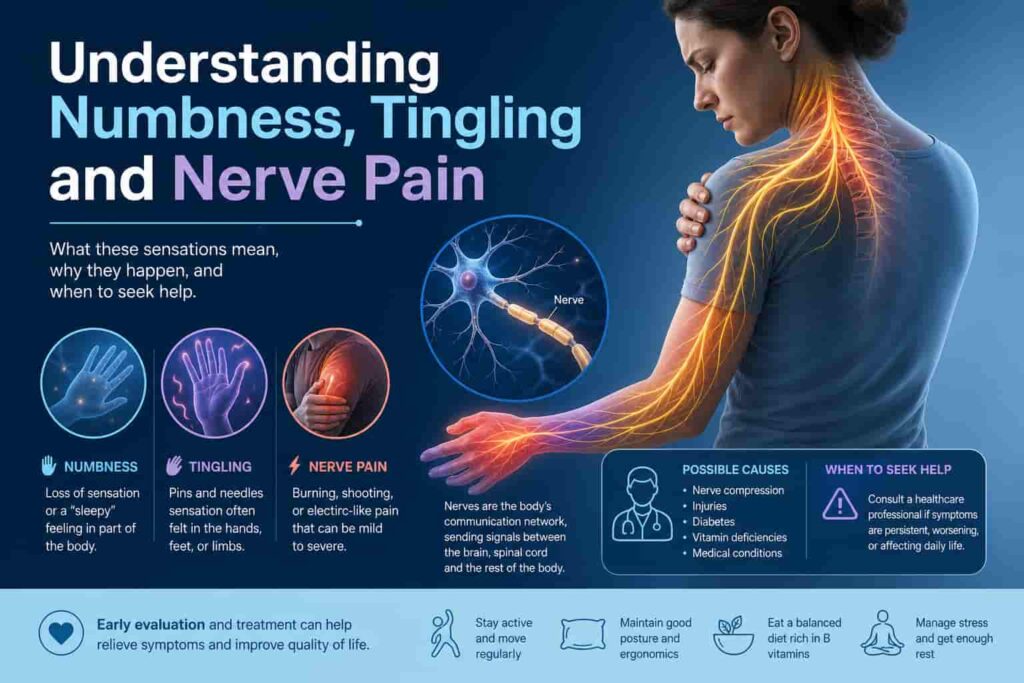
Have you ever experienced a tingling sensation in your hands or feet? Perhaps your arm suddenly felt numb, or you experienced a burning or shooting pain that seemed to follow a nerve.
These sensations can sometimes occur temporarily after sitting or sleeping in an awkward position. However, persistent or recurring numbness, tingling, or nerve pain may indicate an underlying problem that deserves medical attention.
Numbness can result from irritation, pressure, or damage to a nerve. A number of conditions can contribute to these symptoms, including nerve compression, diabetes, injuries, certain vitamin deficiencies, and neurological conditions.
What Does Nerve Pain Feel Like?
Nerve-related symptoms can vary from person to person.
Some people describe nerve symptoms as:
- Tingling or pins-and-needles sensations
- Burning pain
- Sharp or shooting pain
- Numbness or reduced sensation
- Increased sensitivity to touch
- Electric shock-like sensations
- Weakness
- Problems with balance or coordination
The location and pattern of symptoms can provide important information about which nerves may be involved.
Common Causes of Numbness and Tingling
Temporary pressure on a nerve
Sitting or sleeping in one position can temporarily place pressure on a nerve, causing an arm, hand, leg, or foot to “fall asleep.” These sensations often disappear after changing position.
Nerve compression
A nerve can become compressed along its pathway. Conditions such as carpal tunnel syndrome or problems involving the spine can cause numbness, tingling, or pain in specific areas.
Diabetes
Diabetes is one of the common causes of peripheral neuropathy. Symptoms often begin in the feet and may include numbness, burning, tingling, or pain.
Injuries
Falls, accidents, sports injuries, or other trauma can damage or compress nerves and result in changes in sensation or movement.
Vitamin deficiencies and other medical conditions
Certain vitamin deficiencies, autoimmune conditions, infections, medications, and other health conditions can also affect nerve function.
When Should Numbness or Tingling Concern You?
Occasional symptoms that quickly disappear after changing position are often not a cause for concern.
However, you should consider scheduling a medical evaluation if numbness or tingling:
- Persists or becomes constant
- Gets progressively worse
- Keeps coming back
- Spreads to other parts of the body
- Occurs on both sides of the body
- Interferes with everyday activities
- Occurs with pain, weakness, balance problems, or difficulty walking
Persistent symptoms can have many possible causes, so an appropriate medical evaluation is important.
When Is Numbness an Emergency?
Sudden numbness can sometimes signal a serious medical emergency.
Seek emergency medical attention immediately if sudden numbness occurs with symptoms such as:
- Weakness or paralysis
- Difficulty speaking
- Confusion
- Severe dizziness
- A sudden, severe headache
- Sudden numbness involving an entire arm or leg
These symptoms can occur with serious neurological conditions, including stroke.
Do not wait for symptoms to resolve if you suspect a medical emergency.
How Are Nerve Problems Evaluated?
A healthcare professional will typically begin by asking about your symptoms, when they started, where they occur, and what makes them better or worse.
A physical and neurological examination may then be performed to assess sensation, muscle strength, reflexes, coordination, and movement.
Depending on the findings, additional testing such as imaging or nerve studies may be recommended to help identify the underlying cause.
Don’t Ignore Persistent Nerve Symptoms
Numbness, tingling, and nerve pain can have many different causes. While some episodes may be temporary and harmless, persistent or worsening symptoms deserve proper evaluation.
Understanding the cause is an important first step toward choosing appropriate treatment and protecting your neurological health.
Neurological Care at Shiloh Health
At Shiloh Health, our Neurology services are focused on evaluating neurological symptoms and helping patients better understand their condition and care options.
If you are experiencing persistent numbness, tingling, nerve pain, weakness, or other neurological concerns, speak with a healthcare professional about your symptoms.